Introduction
In the world of agriculture, few decisions carry as much financial and operational weight as choosing the right tractor. Whether you are managing a small weekend homestead or overseeing a sprawling commercial agricultural enterprise, the heart of your machinery fleet lies in its power. However, walking into a dealership or browsing online listings can quickly become overwhelming due to the sheer volume of technical specifications. Among these, "horsepower" is the most frequently cited, yet frequently misunderstood, metric.
Choosing the wrong horsepower rating can severely cripple your farm's productivity. An underpowered tractor will struggle with basic tasks, leading to equipment strain, excessive fuel consumption, and premature mechanical failure. Conversely, over-purchasing power introduces unnecessary capital expenditures, higher maintenance costs, and increased soil compaction. To maximize your return on investment, you must understand exactly how tractor horsepower works and how to align it precisely with your acreage and operational demands. This comprehensive guide will demystify tractor power ratings and provide a definitive roadmap to finding your perfect agricultural match.
Decoding Tractor Horsepower: PTO vs. Engine vs. Drawbar
When looking at a tractor spec sheet, you will notice that horsepower is rarely listed as a single, uniform number. Manufacturers categorize power based on where and how it is measured. Understanding these distinctions is critical because a tractor rated at 50 horsepower in one category may only deliver 40 horsepower in another.
Engine Horsepower
Engine horsepower represents the total power generated by the internal combustion engine before it is distributed to the transmission, hydraulics, or auxiliary systems. This is often broken down into gross horsepower and net horsepower. Gross horsepower is measured on a test stand with the engine stripped of essential accessories like the alternator, cooling fan, and muffler. Net horsepower, on the other hand, measures the engine with all standard operating components attached. While engine horsepower gives you an idea of the machine's raw capability, it does not reflect the actual working power available to your implements.
PTO (Power Take-Off) Horsepower
For most farmers, PTO horsepower is the most critical metric on the spec sheet. The Power Take-Off is the rotating shaft located at the rear (and sometimes front) of the tractor that transfers mechanical energy directly to driven implements, such as rotary cutters, balers, and tillers. Because energy is lost as it travels through the tractor's drivetrain and transmission, PTO horsepower is always lower than engine horsepower-typically by 15% to 20%. When buying a tractor primarily to run demanding implements, you must always match the implement's required power to the tractor's PTO horsepower, not its engine horsepower.
Drawbar Horsepower
Drawbar horsepower measures the pulling power available at the tractor's hitch. This metric determines how effectively a tractor can pull heavy, unpowered loads through the field, such as multi-row plows, disks, heavy wagons, or large seeders. Drawbar power depends heavily on the tractor's weight, tire traction, and drivetrain efficiency. A tractor can have immense engine power, but if it lacks the weight and tire footprint to grip the soil, its drawbar horsepower will suffer due to wheel slippage.
Farm Size Categories and Their Horsepower Sweet Spots
Every farm has a unique footprint, and acreage is the primary baseline used to narrow down your machinery requirements. While the specific tasks you perform will ultimately dictate your final choice, farm size provides a highly reliable starting point.
Hobby Farms and Homesteads (1 to 5 Acres)
Managing a small homestead of fewer than five acres requires agility, precision, and versatility rather than raw, massive force. For operations of this scale, sub-compact tractors ranging from 15 to 25 horsepower are the ideal fit. These machines are designed to navigate tight spaces, fit through standard garden gates, and store easily in small barns or residential garages. They provide more than enough power for light landscaping, maintaining a large vegetable garden, clearing snow from driveways, and mowing open lawns. Their lightweight nature also prevents turf damage, making them excellent choices for premium property maintenance.
Small-Scale and Lifestyle Farms (5 to 50 Acres)
As acreage grows past five acres, the workload shifts from basic property maintenance to genuine agricultural tasks. Properties of this size often feature small pastures, woodlots, managed orchards, or small-scale livestock operations. To handle these demands, you should look into the compact tractor segment, which spans from 25 to 50 horsepower. A 25 to 35 horsepower tractor handles light mowing, small arena grooming, and basic loader work beautifully. If your property approaches the 50-acre mark, stepping up to a 40 to 50 horsepower tractor unlocks the ability to use wider rotary cutters, small square balers, and medium-duty round bale movers.
Medium-Scale and Commercial Farms (50 to 500 Acres)
Once an operation crosses the 50-acre threshold, farming often transitions from a lifestyle pursuit to a commercial enterprise. At this scale, time is money, and tasks must be completed within tight seasonal windows. This requires utility tractors ranging from 50 to 150 horsepower.
For farms between 50 and 150 acres, a 50 to 85 horsepower tractor is the versatile workhorse needed for routine hay production, pulling multi-row planters, and lifting heavy pallets of feed or seed.
For farms stretching up to 500 acres, high-utility tractors between 90 and 150 horsepower become necessary. These machines feature heavy-duty frames, advanced hydraulic systems, and enclosed, climate-controlled cabs designed to keep operators comfortable during 12-hour workdays.
Large-Scale Agricultural Operations (500+ Acres)
Large-scale commercial operations focused on broadacre row-crop farming, massive livestock herds, or industrial cash crops require maximum output. These farms depend on row-crop and articulated four-wheel-drive tractors starting at 150 horsepower and scaling all the way up to 600+ horsepower. At this level, the tractor is an industrial power plant designed to pull massive 24-row planters, heavy vertical tillage disks, and giant grain carts simultaneously. These machines are packed with advanced telemetry, automated steering systems, and complex hydraulics to optimize every pass across thousands of acres.
Matching Horsepower to Implements and Agricultural Tasks
A tractor is only as useful as the implements you attach to it. To ensure your tractor performs efficiently, you must carefully evaluate the power requirements of the primary tools you plan to run.
Mowing, Tilling, and Soil Preparation
Maintaining pastures and preparing seedbeds are among the most common tractor duties, but they can be incredibly demanding on an engine.
Rotary Cutters (Bush Hogs): As a general rule of thumb, you need roughly 5 horsepower at the PTO for every foot of cutter width. For example, a 6-foot rotary cutter requires a tractor with at least 30 PTO horsepower to slice through thick brush without stalling the engine.
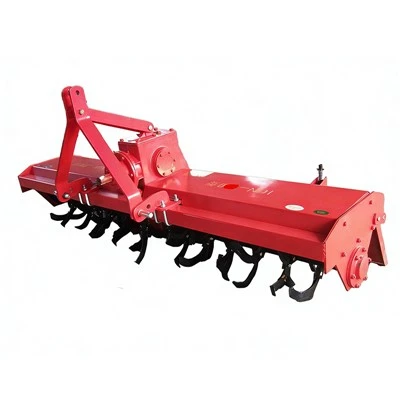
Rotary Tillers: Tillers require significant structural power because they actively chop and pulverize compacted soil. Plan for approximately 4 to 6 horsepower per foot of tiller width, adjusted upward if you are working with heavy, unmanaged clay soils.
Material Handling, Loading, and Livestock Care
Moving heavy items around the farm requires a solid combination of structural weight, hydraulic capability, and engine power.
Front-End Loaders: While hydraulic pressure dictates lifting capacity, engine horsepower determines how effectively the tractor can push into a pile of gravel, wet manure, or packed dirt. Tractors under 25 horsepower struggle with heavy dirt work, whereas a 40 to 60 horsepower utility tractor provides the weight and push needed for serious material handling.
Hay Management: Moving large round bales (which can easily weigh between 1,000 and 1,500 pounds) requires a tractor with at least 45 to 50 horsepower. This power range ensures the machine has the frame size and hydraulic capacity to lift the bale safely without tipping or losing steering control.
Heavy Tillage, Seeding, and Harvesting
For advanced agricultural production, the tractor must pull heavy tools that engage deep into the earth.
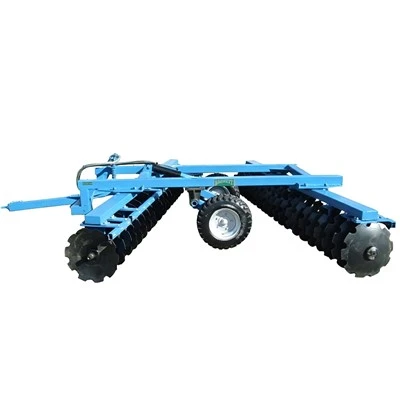
Moldboard and Chisel Plows: Pulling ground-engaging tools requires immense drawbar force. Generally, you will need 10 to 15 horsepower per plow bottom or shank, depending entirely on your soil depth and moisture levels.
Grain Balers: Large round balers are notorious for creating immense power surges, especially as the bale nears full size inside the chamber. To operate a standard commercial round baler safely and efficiently, a tractor with a minimum of 60 to 70 PTO horsepower is required.
The Hidden Factors That Alter Your Horsepower Needs
Acreage and implement charts provide excellent baselines, but real-world conditions often force farmers to adjust their horsepower requirements upward or downward.
Topography, Terrain, and Soil Composition
The physical layout of your land plays a massive role in how much power you actually use. If your farm is flat with loose, sandy loam soil, a lower-horsepower tractor will perform beautifully. However, if your property is characterized by steep hills, rolling terrain, or dense, heavy clay, your tractor will expend a vast amount of energy simply moving its own weight across the field. When working on hills or in heavy clay, it is highly recommended to add a 15% to 20% horsepower buffer to your calculations to prevent the tractor from bogging down under load.
Transmission Types and Hydraulic Flow Requirements
How power is transmitted through your machine changes its efficiency.
Hydrostatic Transmissions: Incredibly popular on compact tractors, hydrostatic transmissions offer smooth, pedal-operated speed control. However, they are less efficient at transferring power than traditional mechanical gear transmissions, consuming more engine power just to operate the hydraulic pumps.
Hydraulic Flow Rates: Modern implements, such as hydraulic fence-post drivers or pneumatic seeders, rely heavily on continuous hydraulic fluid flow (measured in gallons per minute or GPM). Sometimes, you may need to step up to a larger horsepower tractor class not because you need more engine power, but because only the larger models feature the high-output hydraulic pumps necessary to run your advanced attachments.
Future-Proofing and Farm Expansion Plans
Purchasing a tractor is a long-term investment meant to last ten, fifteen, or twenty years. One of the most common mistakes buyers make is purchasing a machine tailored exactly to what they do today, leaving zero room for growth. If you currently manage 20 acres but plan to clear another 15 acres of woods next year, or if you plan to transition from small square bales to large round bales in the future, buy the larger tractor now. It is far more cost-effective to buy slightly more horsepower upfront than to suffer through trade-ins, financing fees, and deprecation when upgrading your entire machinery setup a couple of years down the road.
Conclusion
Finding the perfect tractor for your farm is an exercise in balancing your immediate property needs, your future goals, and your equipment budget. Horsepower is far more than just a marketing number stamped onto a tractor's hood; it is a multi-layered metric that dictates exactly how hard your machine can pull, push, and power the tools that keep your farm running smoothly.
By carefully breaking down your operational requirements-distinguishing between raw engine power and functional PTO performance-you can avoid the dual pitfalls of buying an underpowered machine or over-investing in unnecessary capacity. Take the time to audit your acreage, list your heaviest planned implements, account for your local topography, and always leave a slight power buffer for future expansion. With this systematic approach, your tractor will serve as an efficient, reliable, and highly profitable partner in your agricultural journey for decades to come.